

We listen, we care
What is Binge Eating Disorder?
Binge eating disorder (BED) is diagnosed when someone repeatedly eats an amount of food that leaves them feeling physically unwell, and feels they have lost control over how much, or what, they are eating.
BED differs from bulimia in one important way. After a binge, people with BED do not try to make up for the overeating by taking laxatives, making themselves sick or exercising excessively.
Binge eating is commonly understood as a way of coping with feelings a person finds hard to bear. A binge can have short-term physical effects, including a sense of euphoria, numbness or lethargy. Emotionally, it can take attention away from the original painful feelings, and because the person is the one choosing to eat, it can feel like a way of managing those feelings themselves. The relief is brief.
How is binge eating defined?
The DSM-5 (Diagnostic and Statistical Manual of Mental Disorders, 2013) sets out what counts as an episode of binge eating. An episode:
- takes place over a limited period and involves eating significantly more than most people would in similar circumstances
- involves a sense of having no control over the quantity or quality of food eaten
- is marked by eating faster than usual, eating when not hungry, withdrawing from others because of shame about the eating, and feeling guilty, disgusted or low afterwards
Signs and symptoms of binge eating disorder
People with binge eating disorder can have a body weight anywhere from within the typical range for their height to severely obese. Weight gain can be a feature of binge eating, but it is not always. Those who are overweight are likely to have the same symptoms as other people at an unhealthy weight.
Guilt and shame often lead people to withdraw from others and to keep their eating secret, and their routines around food can become rigid. Anxiety, including obsessive-compulsive behaviours, often occurs alongside binge eating disorders, as does depression. Low mood can come before an eating disorder or develop as a result of it, along with the painful feelings that go with it.
The cycle of binge eating
Like other eating disorders, BED often becomes a cycle in which difficult feelings and harmful behaviours reinforce each other. Someone may first turn to food to soothe themselves, without bingeing. Guilt and shame follow, and they look for more comfort in food. Over time this can build into full binge episodes, with the distress that comes with them.
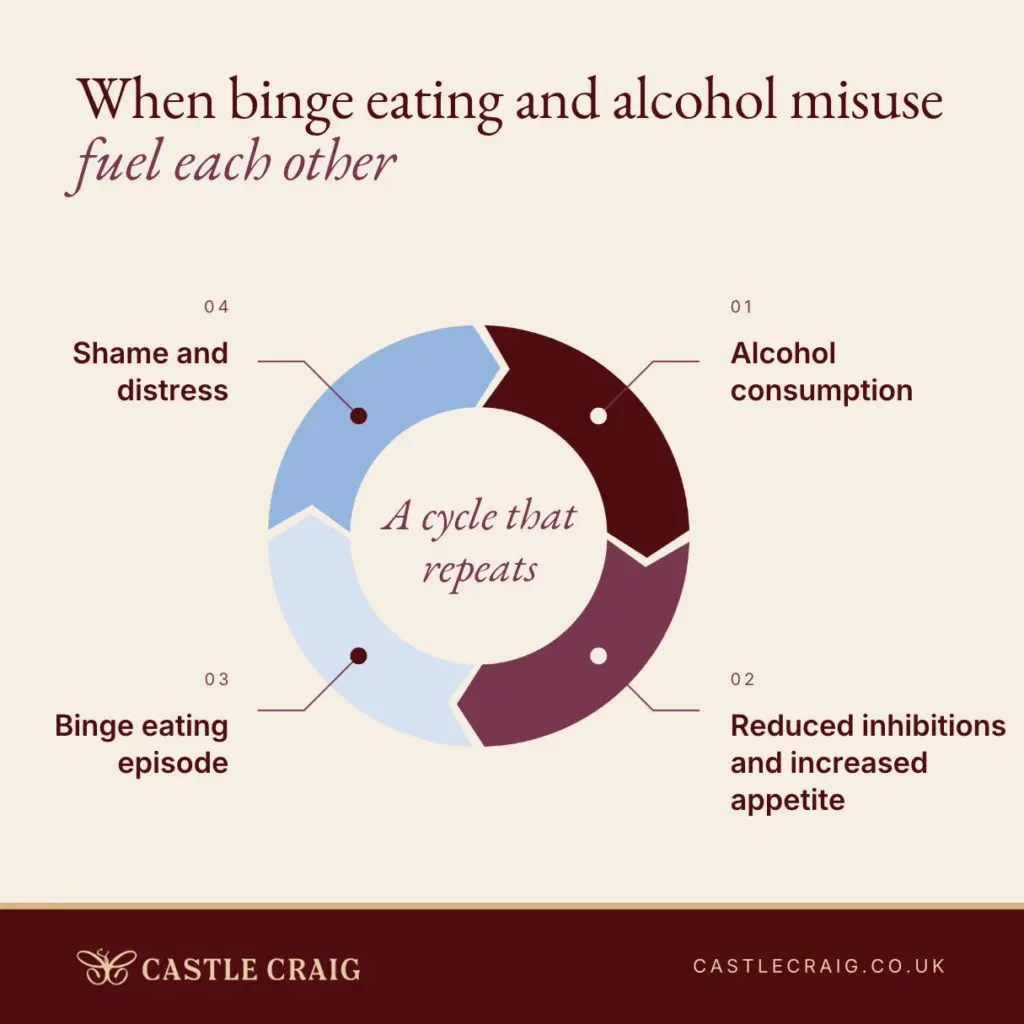
Binge eating disorder and alcohol: an overlooked connection
Alcohol impairs judgement and self-control, and it can increase appetite, making a binge more likely in people who have a history of binge eating. The shame that follows binge eating can then drive further drinking, so each condition keeps the other going in a vicious cycle.
“Binge eating disorder is an incredibly difficult thing to face,” says Castle Craig Therapy Programme Manager Jessica Tomlinson-Hill. “Bingeing episodes often occur in secret, are associated with a lot of shame, and it can be very hard for those who have this condition to talk openly about it or get help. Psychoeducation about its prevalence, triggers and treatment are an important way to bring the issue into the light so people can get the help they need.”
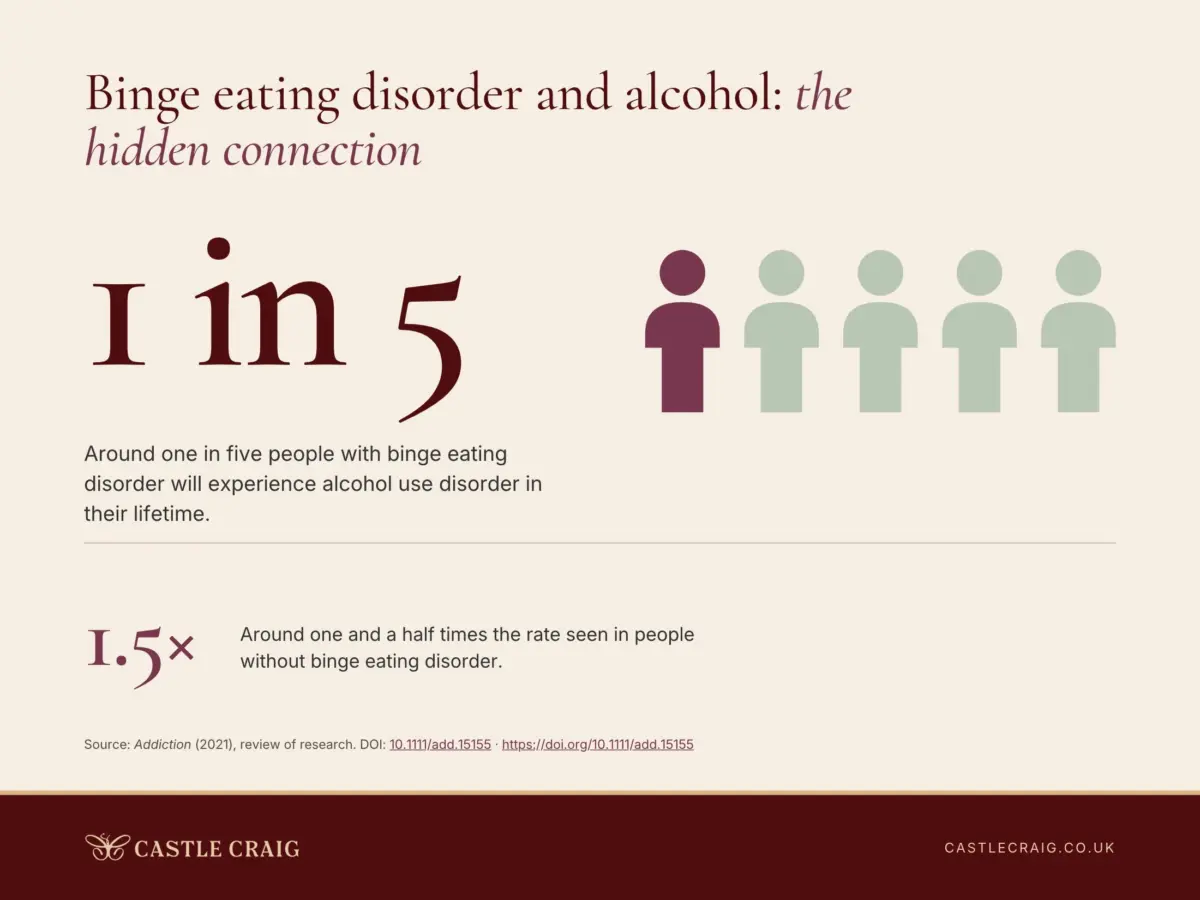
A 2021 review of research published in the journal Addiction found that around one in five people with binge eating disorder will have alcohol use disorder at some point in their lives, about one and a half times the rate in people without the condition. Other research shows that when an eating disorder and substance misuse occur together, recovery tends to take longer and relapse is more likely. Treating one without the other can leave a person vulnerable to relapse.
Treatment for binge eating disorder
Binge eating disorder is a serious condition with significant physical and mental health consequences. Psychological treatment can help people learn to manage difficult emotions in healthier ways.
Individual and group therapy, specialised treatment approaches, expert psychotherapy, medication and medical care can all support recovery. An assessment by qualified medical and mental health professionals makes it possible to build a treatment plan around each person’s needs.
Many people also find peer support useful alongside professional treatment. Groups such as Overeaters Anonymous, Eating Disorders Anonymous and the support groups run by the charity Beat bring together people who understand the condition from their own experience, which can ease the isolation that often comes with it.
At Castle Craig, we treat people with binge eating disorder through online therapy sessions with an experienced psychotherapist. For those coming to our residential rehab for alcohol or drug addiction alongside a binge eating disorder, we treat both conditions at the same time.
Frequently asked questions
Why do people binge eat?
Binge eating is often understood as a way of numbing or escaping painful emotions or stress. In the short term, a binge can bring real relief: a sense of comfort, numbness, drowsiness or even a brief euphoria. It can distract from the feelings underneath, and it may give the person a sense of control over their emotional state.
How is binge eating different from bulimia?
People with bulimia try to undo the effects of overeating usually by making themselves vomit or by using laxatives or exercising excessively. People with binge eating disorder do not do this. This is one of the key distinctions between the two conditions.
How do people feel after binge eating?
That relief that binge eating brings for some people rarely lasts. What usually follows is guilt, shame or low mood, and these feelings can make the need for comfort even stronger, producing an unhealthy cycle of binge eating.
Is binge eating just a lack of willpower?
No. Binge eating disorder is a mental health condition, and it is often a way of coping with painful feelings. People with the condition often feel intense guilt about it, which can make them less likely to ask for help. Wanting to stop is rarely the problem. Stopping is hard without support.
Why do I binge eat at night?
There is rarely one cause. Binge eating is often linked to difficult emotions, and evenings can be when people are tired, alone and have fewer distractions. Skipping meals or restricting food earlier in the day can also make a binge more likely later on.
What can I do after a binge?
Many people feel physically uncomfortable and ashamed afterwards. Try to be gentle with yourself, avoid punishing yourself by skipping meals or exercising, and return to your usual eating when you are ready. If binges are happening repeatedly, speak to your GP or a specialist service.
Can medication help with binge eating disorder?
Medication may be part of treatment for some people, as decided with a doctor after a full assessment. It is not a quick fix, and it works best alongside psychological support.
Contact us
If you are struggling with binge eating disorder, alcohol or your mental health, you can talk to our team about what support would suit you. Castle Craig offers online counselling and residential treatment for addiction and mental health conditions. Contact us for more information.
We are Here to Help you Today
Don’t Suffer Alone. Our Friendly Team Are Waiting to Help You Start Your Recovery Journey.
