

Attention-deficit/hyperactivity disorder, commonly known as ADHD, is a form of neurodiversity. It affects how the brain regulates attention, impulse control, and the processing of reward.
ADHD can go unidentified for years, and in that time, substances can become a way of managing what nothing else seems to fix.
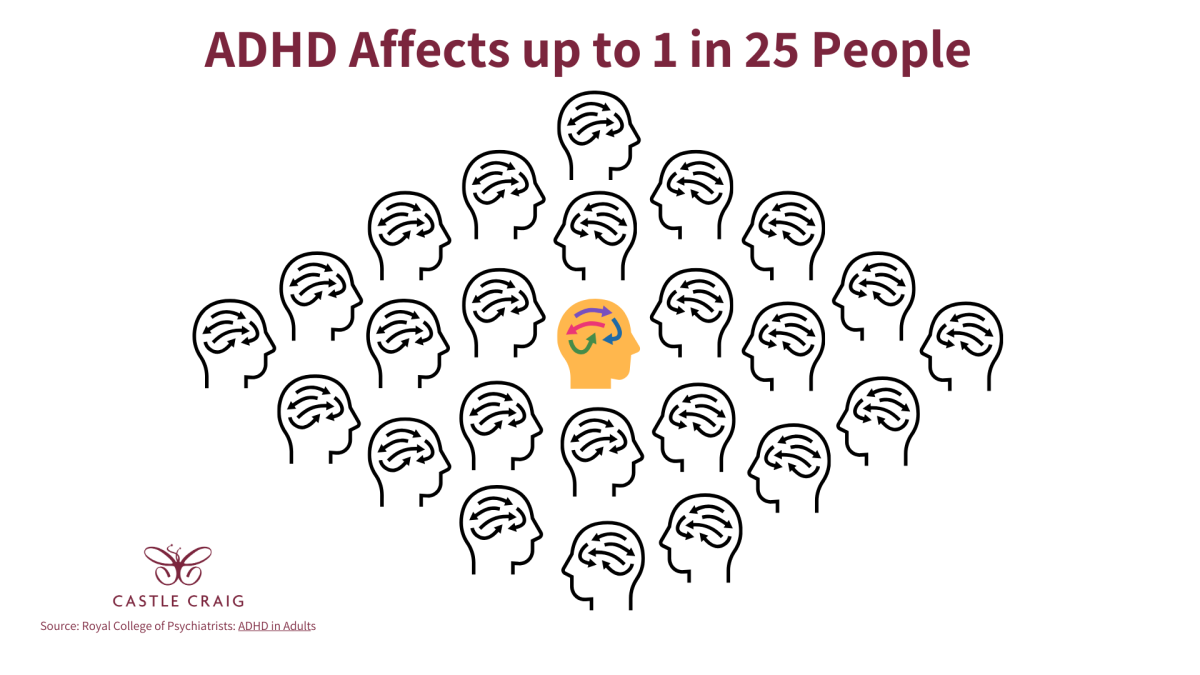
It’s been estimated that up to 50% of adolescents and adults with substance use disorders have an ADHD diagnosis. A separate study of more than 3,500 people across 10 countries found that around 40% of people screened positive for ADHD. The Royal College of Psychiatrists suggests that it can affect up to 1 in 25-30 adults.
Whilst Castle Craig treats addiction with co-occurring ADHD, we don’t provide formal ADHD diagnoses. If a formal diagnosis is needed, we can help with referral to appropriate specialists that we work alongside, before treatment begins.
Learn more about our approach
Why are people with ADHD more prone to addiction?
-
The ADHD brain
People with ADHD are more susceptible to addiction for several interconnected reasons; research shows the likelihood of developing a substance use disorder is twice as high among those with ADHD.
This is because ADHD affects the brain systems that regulate reward and dopamine – the two same systems that make certain substances feel like a solution.
When the brain finds it harder to produce a reliable sense of reward or calm through everyday activity, substances that produce that feeling quickly can become the seemingly sensible route:
- Alcohol or cannabis can quieten a busy mind
- Stimulants can produce focus that felt impossible
These substances can help with ADHD symptoms temporarily. But by the time someone realises there’s a problem, addiction can be well established.
-
ADHD and impulse control
Impulse control is another area ADHD affects directly. The same difficulty that makes it hard to pause before speaking or acting makes it harder to pause before using. For many people with ADHD, substances can also become a way of managing emotions that feel overwhelming. Someone with ADHD may be more likely to use whatever makes it stop fastest.
-
Prescription drug addiction and ADHD
Sometimes, ADHD and drug addiction are linked because the stimulant medications prescribed to treat ADHD can themselves be addictive. When taken as prescribed under clinical supervision, stimulant medications don’t appear to increase the risk of developing addiction. But the same properties that make them therapeutic at controlled doses can make them attractive for recreational use. Managing ADHD medication in the context of addiction treatment requires careful clinical oversight.
ADHD and addiction: understanding treatment options
Dual diagnosis treatment addresses the substance use and helps the individual better learn to manage their ADHD at the same time. If we treat the addiction without managing ADHD – or vice versa – the underlying pattern stays in place.
-
Therapies for ADHD and addiction
We use a range of therapies to treat ADHD and addiction:
Cognitive Behavioural Therapy (CBT) has been shown to help manage symptoms of adult ADHD and support recovery.Structured psychosocial therapies are effective in people with ADHD and co-occurring substance use disorders:
Dialectical Behaviour Therapy (DBT), group therapy, individual therapy, and family therapy are also part of the programme at Castle Craig.
The evidence for these therapies is strong, but how we deliver them makes as much difference as which therapies we use. The way that an ADHD brain engages with structured, skills-based formats differently from open-ended reflection. Pace, repetition, and explicit skill-building all make therapy more effective.
-
Medically managed detox
Not everyone entering treatment needs a medically managed detox. But for some substances, it’s not safe to stop without clinical supervision.
Alcohol and benzodiazepine withdrawal, for example, can produce serious medical complications if managed without oversight, and quitting opioids alone can also be dangerous and difficult. For people living with ADHD in particular, withdrawal can intensify ADHD symptoms, so stopping without support is often harder.
Castle Craig’s detox unit provides 24-hour nursing and medical cover to keep patients safe and comfortable.
-
Inpatient treatment for ADHD and addiction
Residential treatment is often the right choice when dependence is significant. It can also help when outpatient treatment hasn’t worked before, or when co-occurring conditions need more support.
At Castle Craig, each patient receives a full psychiatric assessment on arrival. We build the treatment plan around the assessment findings. For those living with ADHD, that includes adapting how the therapeutic programme is delivered, as well as what it covers.
If you have a longer history of substance use, or a pattern of relapse, Castle Craig’s Advanced Programme offers extended residential treatment beyond the standard Foundation Programme. It covers emotional regulation, trauma work, and more time in the 12-Step programme. That extra structure and time can help those learning to better manage ADHD alongside your addiction recovery,
-
Outpatient treatment for ADHD and addiction
Outpatient treatment programmes can be a better fit when the level of dependence is lower, or when you have strong support in place and can’t take extended time away from work or family.
Standard outpatient formats don’t always work well for ADHD. The treatment approach needs to match how an ADHD brain engages. Shorter, more structured sessions and explicit skill-building are often more effective than longer, less directed approaches.
-
Online treatment for ADHD and addiction
Secure video sessions are available if work, caring responsibilities, or distance make it hard to get to a clinic. For people with ADHD, joining from home also means fewer things to schedule around, which makes it easier to stay consistent.
Castle Health’s online programme is part of our continuing care. People living with ADHD are more likely to disengage from treatment if they have to switch providers. After residential treatment at Castle Craig ends, aftercare patients can move into online sessions with the same clinical team.
You can find out more about ongoing aftercare and recovery support and what involvement looks like beyond the residential stay.
“I gained a better understanding of addiction as an illness and compassion for those with addictions. Awareness of the need for change in ourselves, in order to improve the roles we have been playing. The need to set and keep healthy boundaries, for our benefit, and for theirs.”
What to expect from ADHD and addiction treatment with Castle Craig
At Castle Craig, ADHD is part of the clinical picture from the point of admission. A Consultant Psychiatrist is involved from the outset. They lead the clinical team in assessing and treating co-occurring conditions within the same programme as the addiction.
When you first get in touch, the conversation is confidential and carries no obligation to commit to treatment. Our admissions team will speak with you about what is and isn’t the right fit, and the process moves at a pace that works for you.
Castle Craig does not provide formal ADHD assessments or diagnoses. If you arrive with a diagnosis already in hand, that allows us to decide how to best approach your treatment from the start.
Not having a formal diagnosis won’t stop you from receiving ADHD-aware addiction treatment. If you arrive with a strong suspicion but no formal diagnosis, we work with that picture. Where appropriate, we can refer you to specialists before we undertake treatment.
If someone in your life is dealing with ADHD and addiction
When someone has both ADHD and a substance use disorder, the behaviour can be hard to make sense of from the outside. What looks like a choice often isn’t. Once you understand that, it can change how you approach the situation.
You may also find yourself uncertain about whether ADHD or addiction is the primary issue. That uncertainty is understandable, but it’s not a question that needs answering to begin treatment.
If you want to talk through what you’ve observed and what the options might be, our admissions team can speak with you directly. You don’t need to have a conversation with the person in your life before you call us.
Castle Craig’s family programme runs alongside residential treatment. Family therapy sessions start once the patient is ready to engage with them. Family workshops run separately online, and they’re included in the cost of treatment. We designed them to help family members understand addiction as a medical condition, not a character failing, and to learn how they can support the person in recovery.
Confidential ADHD and Addiction Assessment
Compassionate, expertly delivered evidence-based practices and a patient-centred approach are at the heart of our treatment model. Request a call-back from one of our professionals on any day of the week.
Frequently asked questions about ADHD and addiction
-
Can I keep taking my ADHD medication during addiction treatment?
Our clinical team guides decisions about your medication during treatment.
Research suggests that ADHD medication may not increase the risk of developing a substance use disorder. But prescribing decisions during addiction treatment depend on several things, including the substance you’re being treated for, how severe your dependence is, and which medication is involved. Our clinical team assesses each person individually and discusses prescribing as part of that process.
-
Do I need a formal ADHD diagnosis before starting addiction treatment with Castle Craig?
No, and you don’t need one before you call. If you have a diagnosis already, that can help us decide on your treatment plan right away. But if you think you have ADHD without a formal diagnosis, we work with what you and the clinical team observe. That might mean a different pace in sessions, more explicit structure, or a particular focus on emotional regulation. If a formal diagnosis would help clinically, we refer you to a specialist and keep treatment going at the same time.
-
What if I’m not sure whether the ADHD or the substance use came first?
Most people ask this, and it’s a fair question. In most cases, the order makes no clinical difference, because we treat both conditions together. The focus is on the pattern, not which one came first. Exploring the sequence can be useful in therapy, but don’t let it stop you from getting help.
-
How much does private dual diagnosis treatment cost?
The cost of residential treatment at Castle Craig varies depending on the length of stay and the level of care required. Private health insurance covers residential treatment in many cases, and Castle Craig works with a range of insurers. Our admissions team can talk you through the options without any obligation.
-
Is treatment for ADHD and addiction available on the NHS?
NHS pathways exist through community drug and alcohol services and adult mental health teams. In practice, the NHS tends to treat addiction and mental health separately rather than together, and waiting times vary by area. Castle Craig accepts NHS-funded referrals for residential treatment when the clinical criteria are met. Our admissions team can explain how that works.
-
Why are people with ADHD more susceptible to addiction?
ADHD affects the brain’s ability to regulate reward, attention, and emotion. When those systems are already under strain, substances that produce quick relief become hard to resist. People with ADHD are often more impulsive, which can make them more likely to try substances in the first place, or to use them to a level that becomes harmful. Some stimulant medications used to treat ADHD can also be addictive, especially without adequate medical oversight.